🚚 Free Shipping on orders $500+ · Veteran-Owned & Operated

Over-the-Range vs. Countertop Microwave: Which Is Right for Your Kitchen?
Over-the-range or countertop — the right microwave depends less on brand and more on how your kitchen is laid out and how you actually use one. Here is how to think through it.
Over-the-Range Microwaves
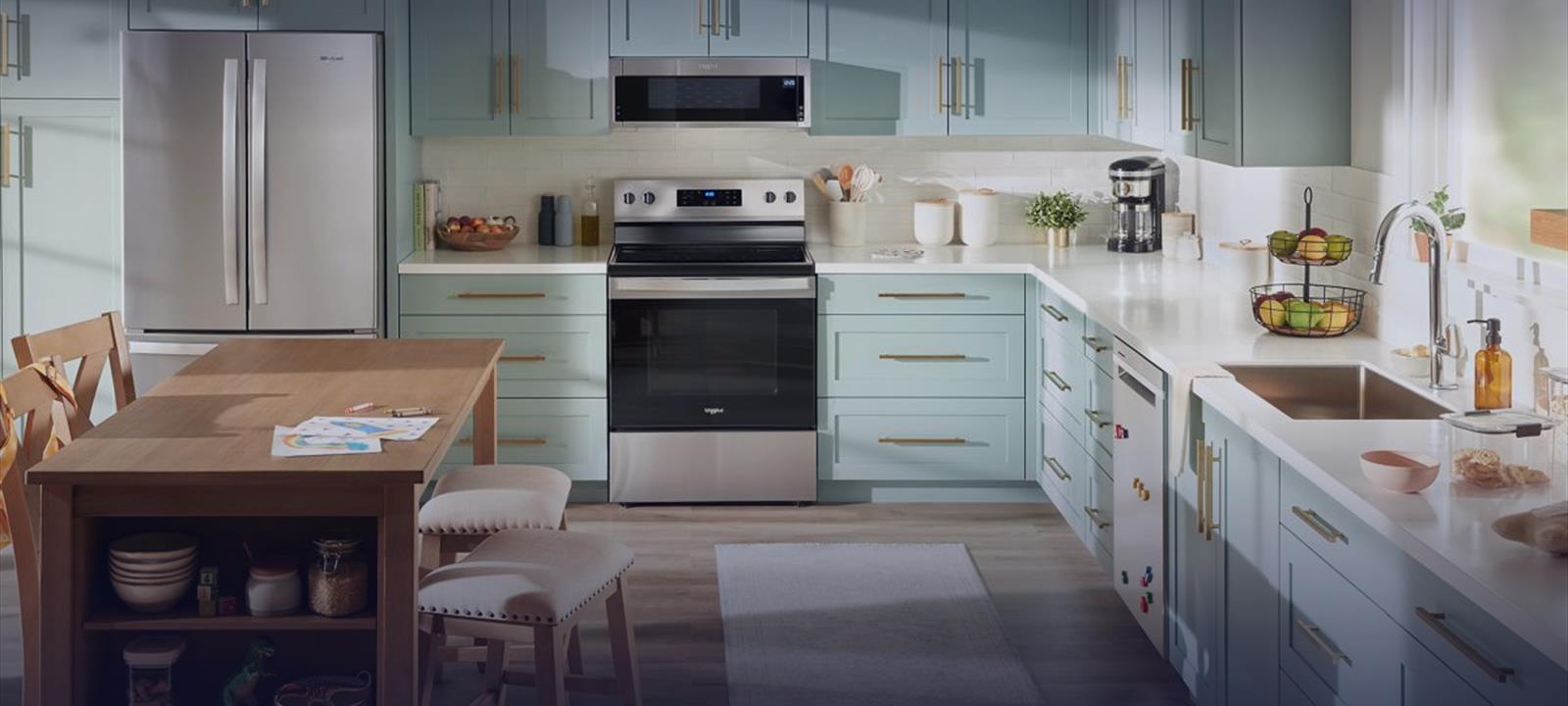
An over-the-range (OTR) microwave mounts above your cooktop and doubles as a range hood, venting smoke, steam, and odors while it cooks. This is the space-saving choice: you free up counter space entirely, and most OTR models add a light fixture for the cooktop below. The tradeoff is height — controls and the turntable sit higher up, which can be inconvenient for shorter cooks, and installation requires either ducted or recirculating ventilation to be set up correctly.
Countertop Microwaves
A countertop model is the simplest option: plug it in, set it down, done. It is also the easiest to replace later without touching cabinetry or venting. The cost is counter space, which matters in smaller kitchens, and you lose the built-in range-hood function entirely.
Capacity: What 1.7 Cu. Ft. Actually Means
Microwave capacity is usually listed in cubic feet of interior space. A 1.6 to 1.9 cu. ft. microwave comfortably fits a full dinner plate or a standard casserole dish, which covers most households. If you regularly reheat large stockware or bake sheets of food, look for larger interior width and height, not just the total volume number.
Venting: The Detail Most People Skip
If you are replacing an OTR microwave, check whether your current setup vents outside (ducted) or recirculates air through a charcoal filter. Ducted venting is more effective at clearing smoke and moisture, but recirculating units are simpler to install when there is no existing duct run. Motor class and CFM rating (for example, a 300 CFM 2-speed motor) tell you how much air the unit can actually move — higher is better if you cook with a lot of steam or smoke.
Features That Are Genuinely Useful
- Express cooking buttons skip the need to type in times for common foods.
- Sensor cooking adjusts time automatically based on steam output.
- Dishwasher-safe turntables save a step on cleanup day.
- Adjustable cooktop lighting on OTR models doubles as a kitchen night light.
Compare our current microwave lineup, or talk to us about venting and mounting before you buy — AKK handles the full installation, ducted or recirculating.