🚚 Free Shipping on orders $500+ · Veteran-Owned & Operated
Gas vs. Electric Range: How to Choose the Right One for Your Kitchen
Choosing a new range comes down to one core decision before anything else: gas or electric. Both cook food well, but they behave differently, cost differently to run, and suit different kitchens. Here is what actually matters when you are deciding.
Gas Ranges: Instant Control, Open-Flame Cooking
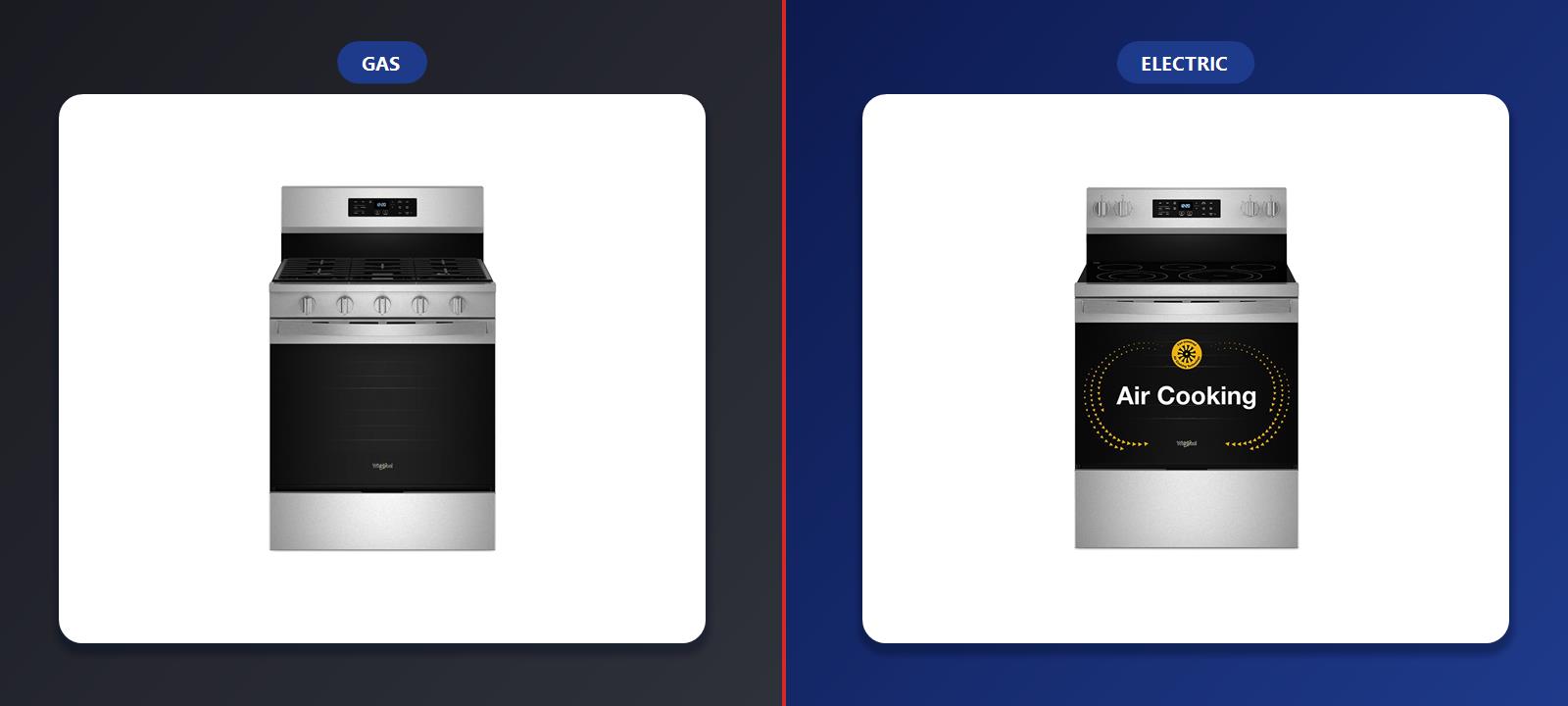
Gas burners respond the moment you turn the knob, which makes them easier to fine-tune when you are searing, simmering, or working with multiple pans at once. Many cooks also prefer an open flame for wok cooking or char-based recipes. The tradeoff: gas ranges need an existing gas line, and cleanup around the grates and burner caps takes a bit more effort than a flat glass cooktop.
Electric Ranges: Even Heat, Easier Cleanup
Electric ranges, especially those with radiant glass cooktops, heat cookware evenly across the whole pan bottom and wipe clean in seconds. Newer electric ranges with air fry and air baking modes (like Whirlpool’s Air Cooking Technology) can also handle tasks that used to require a separate countertop appliance. The main downside is a slower response time when you need to drop the heat quickly, though induction-style electric cooktops close much of that gap.
Sizing and Capacity
Standard ranges are 30 inches wide, which fits the vast majority of Colorado kitchen cutouts, but always double check your cutout width, height, and depth before ordering — especially depth with the door open, since that determines how much clearance you need in front of the range. Oven capacity matters too: a 5.0 to 5.3 cu. ft. oven comfortably fits a full-size turkey or two 9×13 pans side by side, while smaller ovens may not.
Features Worth Paying For
- Self-clean cycles save real time over manual scrubbing.
- Convection or air-fry modes cook more evenly and can cut cook times.
- Dual or FlexHeat elements let one burner handle both a small pan and a large stockpot.
- Fingerprint-resistant finishes matter more than people expect in a busy kitchen.
Installation Considerations
Electric ranges typically need a dedicated 40-50 amp circuit; gas ranges need a properly sized gas line and, in many cases, a nearby 120V outlet for electronic ignition and controls. If you are converting from one fuel type to the other, budget for the electrical or gas line work in addition to the appliance itself — this is exactly the kind of thing our installation crews check before delivery day, not after.
Browse our current selection of ranges, or if you would rather talk it through first, see how AKK’s installation service works.