🚚 Free Shipping on orders $500+ · Veteran-Owned & Operated

How to Choose a Toilet: Bowl Shape, Height, and Rough-In Explained
Toilets look interchangeable on a store shelf, but the differences that matter are almost never visible from the box art. Get the rough-in measurement wrong and nothing else matters — it simply will not fit. Get the rest right and you have picked something comfortable, water-efficient, and easy to install. Here is what to check before you buy.
Rough-In: Measure This First
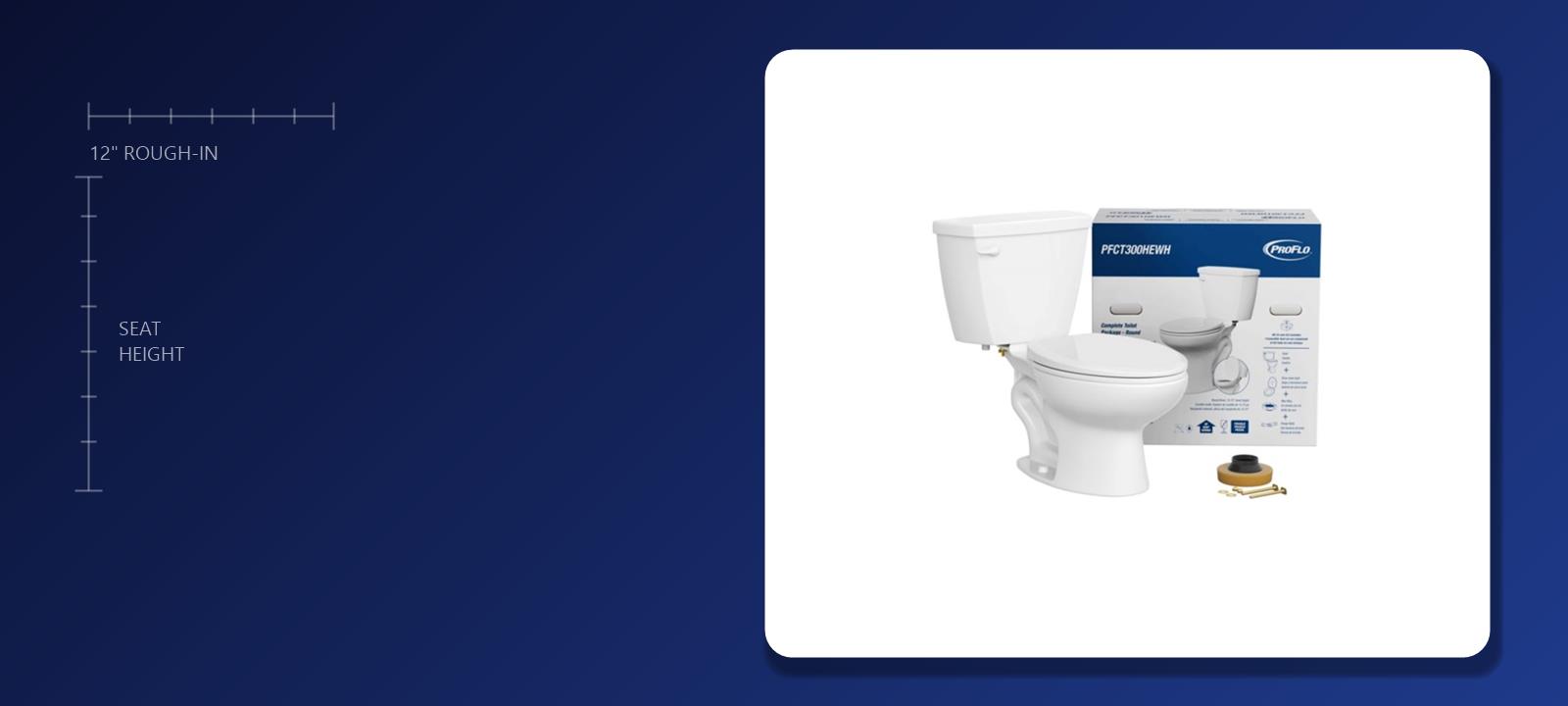
The rough-in is the distance from the finished wall behind the toilet to the center of the floor drain bolts — not the distance to the baseboard or the old toilet’s edge. Most homes use a 12-inch rough-in, which is the standard for the vast majority of toilets sold today. Measure your own space before ordering; a 10-inch or 14-inch rough-in exists but is far less common, and the wrong size simply will not line up with your existing drain.
Bowl Shape: Round vs. Elongated
Round bowls are about 1½ inches shorter front-to-back, which makes them a better fit for smaller bathrooms or tight half-baths where every inch of clearance counts. Elongated bowls extend further forward for more sitting room and are generally considered more comfortable for adults — it is the shape most new construction defaults to today. If your space allows either, elongated is the more comfortable choice; if you are replacing a toilet in a cramped existing footprint, measure the clearance before assuming elongated will fit.
Height: Standard vs. Comfort Height
Standard height toilets sit around 15 inches from floor to seat — the traditional height most people grew up with. Comfort height (sometimes called ADA or chair height) sits closer to 17–19 inches, matching standard chair height for easier sitting and standing. Comfort height has become the more common choice for adults and is required for ADA-compliant bathrooms; standard height still makes sense for households with young children.
Flush Rate and WaterSense Certification
Federal standards cap toilets at 1.6 gallons per flush, but most current models use far less — 1.28 gallons per flush is now the common standard for a WaterSense-certified toilet, cutting water use by 20% or more versus older fixtures with no meaningful drop in flushing performance. Look for the WaterSense label directly; it is the same certification the EPA uses for efficient faucets and showerheads, and it is often required for rebates in drought-conscious states like Colorado.
Complete Kits Save a Trip
A “complete” toilet package includes the tank, bowl, seat, wax ring, and closet bolts all in one box — everything needed for installation, with nothing to source separately. It is worth checking whether a seat is actually included before you buy; plenty of listings quote a lower price specifically because the seat is sold separately.
See our current toilet selection, or contact us if you would like help figuring out which configuration fits your bathroom.